

Alabama’s utility workers keep the state’s electric, natural gas, water, and sewer systems operating day in and day out. Whether they work for Alabama Power, Spire Alabama, Birmingham Water Works, Huntsville Utilities, a municipal utility, an electric cooperative, or a utility contractor, thousands of workers across Alabama perform physically demanding jobs that expose them to serious workplace hazards.
Fortunately, most utility workers are covered by Alabama workers’ compensation if they’re injured on the job, but getting those benefits isn’t always easy. Employers and insurance companies often dispute claims, question the severity of injuries, or pressure workers into settling before the full extent of their injuries and future medical needs are known.
When that happens, we help injured workers push back so they can get the compensation they deserve. For more than 50 years, Nomberg Law Firm has been protecting the rights of injured Alabama workers when employers and big insurance try to avoid paying what’s fair.
If you’ve been injured while working for a utility company or contractor in Alabama, contact our experienced Birmingham workers’ compensation attorneys today for a free consultation.
How dangerous is utility work?
Utility workers face some of the highest risks of serious injury and death of any industry. According to the National Safety Council, more than 20,000 utility workers in the U.S. suffered injuries that required medical attention between 2023 and 2024.
In 2024 alone, 30 utility workers were killed on the job. The industry’s fatality rate of 2.4 deaths per 100,000 workers that year was higher than the manufacturing sector, highlighting just how dangerous utility work is.
One reason utility work is so hazardous is that employees are often exposed to multiple high-risk conditions during a single shift. Depending on their job duties, utility workers may encounter:
- Electrical hazards and electrocution
- Falls from utility poles, bucket trucks, ladders, and elevated equipment
- Repetitive lifting, carrying, climbing, and overexertion injuries
- Heavy equipment and excavation accidents
- Gas leaks, explosions, and fires
- Trenching and confined spaces, including manholes and underground vaults
- Exposure to sewage, hazardous chemicals, and biological contaminants
- Heat stress, cold exposure, and severe weather
- Traffic hazards while working along roadsides and highways
Many utility employees also work around the clock to restore power, repair damaged infrastructure, or respond to water and gas emergencies after tornadoes, hurricanes, ice storms, and other severe weather events.
While employers are required to provide proper training, protective equipment, and safe work practices, serious accidents can still occur far too often, leaving workers with life-changing injuries.
OSHA cites Alabama utility contractor after the deaths of 2 workers
In February 2026, the U.S. Department of Labor cited Alabama-based Construction Labor Services after an investigation found workers were exposed to toxic sewage gases while installing sewer lines in a manhole, resulting in 2 fatalities. OSHA proposed $257,700 in penalties, alleging the company failed to provide required confined-space training, atmospheric testing, emergency rescue procedures, and other safety protections.
The tragedy serves as a reminder of the serious hazards utility workers face when working in manholes, sewer systems, and other confined spaces, where toxic gases and oxygen-deficient environments can quickly become deadly.
Do utility workers in Alabama get workers’ comp if they’re injured at work?
In most cases, yes.
Alabama law generally requires employers with 5 or more employees to carry workers’ compensation insurance. To qualify for benefits:
- You must be an employee rather than an independent contractor.
- You must be able to prove that your injury or occupational illness arose out of and occurred during your employment. This is often accomplished through accident reports, medical records, witness statements, photographs, surveillance footage, or other evidence linking your injury to your work duties.
Workers’ compensation is a no-fault system. That means you typically don’t have to prove your employer was negligent to receive benefits, and you can often get benefits even if you made a mistake that led to the accident.
What types of injuries and illnesses are covered by workers’ comp?
Workers’ compensation covers many different work-related injuries, diseases, and illnesses that are common among utility workers, including:
- Traumatic injuries that result from falls, electrical accidents, vehicle crashes, explosions, trench collapses, or being struck by heavy equipment. These can include broken bones, burns, crush injuries, spinal cord injuries, traumatic brain injuries, amputations, and internal injuries.
- Occupational illnesses like certain cancers and respiratory conditions that result from exposure to chemicals, sewage, mold, hazardous gases, asbestos, lead, or extreme heat.
- Repetitive stress injuries that develop over months or years from climbing poles, operating tools, lifting equipment, or performing repetitive overhead work. Common examples include rotator cuff injuries, back injuries, knee injuries, and carpal tunnel syndrome.
- Pre-existing conditions that are aggravated or accelerated by your work duties.
The key to getting workers’ comp with any of these conditions is being able to prove they were a direct result of your job duties or work environment.
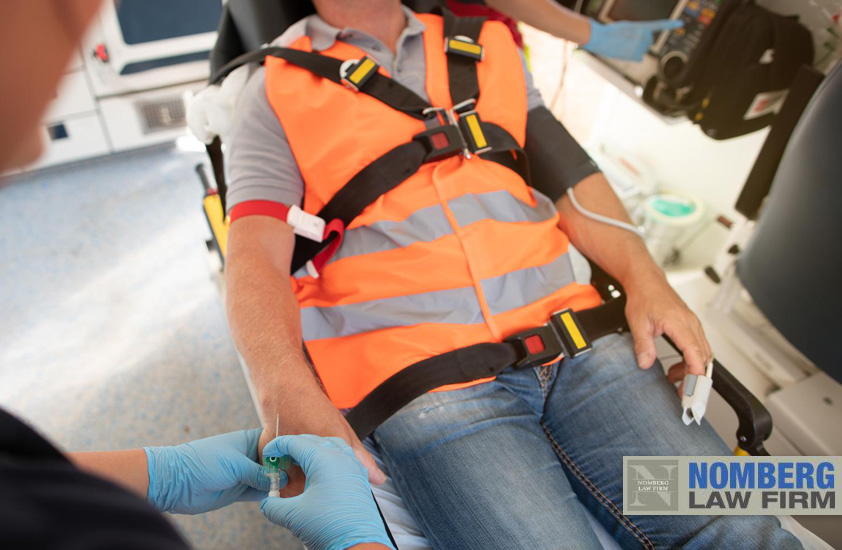
Avoid these mistakes when filing your work injury claim
Learn about deadlines, rules, and filing procedures to ensure a successful workers’ compensation claim.
How much compensation can you get for an injury at work in Alabama?
The amount and types of workers’ compensation you receive depend on the severity of your injury, the medical treatment you require, whether you’re able to return to work, and whether your injury results in a temporary or permanent disability.
Depending on your claim, you may be entitled to:
- Medical benefits, including doctor visits, hospital care, surgery, physical therapy, prescription medications, medical equipment, and mileage reimbursement for authorized travel to and from medical appointments
- Temporary disability benefits to replace a portion of your lost wages (typically two-thirds) while you’re unable to work or can only return to lower-paying light-duty work
- Permanent disability benefits if your injury leaves you with lasting impairments or prevents you from returning to your previous job
- Vocational rehabilitation benefits if you need assistance returning to the workforce in a different capacity
- Death benefits for eligible surviving family members if a work-related injury or illness is fatal
For utility workers who suffer catastrophic injuries—such as severe burns, amputations, spinal cord injuries, or traumatic brain injuries—the value of a workers’ compensation settlement can be significantly higher. Future medical treatment, permanent work restrictions, and lost earning capacity should all be considered before agreeing to a settlement.
Before accepting any settlement offer, speak with a local Alabama workers’ compensation lawyer to understand the full value of your claim.
Settling too early could leave you responsible for future expenses that should have been taken into account.
How do I file a workers’ comp claim in Alabama?
If you’re injured while working for a utility company in Alabama, take these steps to help protect your claim:
- Seek medical treatment immediately from an authorized treating physician. Ask your employer for a list of approved doctors.
- Report your injury to your employer in writing as soon as possible (Alabama law generally requires notice within 5 days when practical and no later than 90 days).
- Follow your authorized treating physician’s recommendations, and keep records of your medical treatment and missed work.
- Make sure your employer files a First Report of Injury form to officially start your claim.
Contact a workers’ compensation attorney if your claim is denied or delayed or you don’t think you’re being compensated fairly.
How long can someone be on workers’ comp in Alabama?
It depends on the type and severity of your injury. Some Alabama workers receive benefits for only a few weeks, while others may qualify for benefits for years or even for life in cases involving permanent total disabilities.
Under Alabama workers’ compensation law:
- Temporary total disability (TTD) benefits may continue as long as you’re unable to work because of your injury and remain temporarily totally disabled.
- Temporary partial disability (TPD) benefits are generally limited to 300 weeks.
- Permanent partial disability (PPD) benefits for injuries to the body as a whole are generally limited to 300 weeks.
- Permanent total disability (PTD) benefits are not subject to a time limit and may continue for as long as you remain permanently and totally disabled.
- Death benefits for eligible dependents may continue for up to 500 weeks.
Medical benefits are not tied to these time limits. If authorized medical treatment remains reasonably necessary for your work-related injury, workers’ compensation may continue to cover those medical expenses even after wage replacement benefits have ended.
Because the duration of benefits depends on your medical condition, work restrictions, and the type of disability involved, it’s crucial to understand your rights before agreeing to end your claim or accept a settlement.
Injured on the job as a utility worker in Birmingham? We can help.
A workers’ compensation claim can affect your finances for years to come. Before accepting a settlement or assuming the insurance company is treating you fairly, speak with the experienced Birmingham workers’ compensation attorneys at Nomberg Law Firm. We’ll review your claim, explain your options, and fight for the full benefits you deserve.
Learn more about how we can help maximize your workers’ comp claim by scheduling a free consultation with Nomberg Law Firm today.