

A spinal injury can change nearly every part of your life, especially when it affects your ability to work or support your family. While some workers recover after a few months of treatment, others are left dealing with chronic pain, nerve damage, mobility limitations, or permanent restrictions that impact their future earning capacity.
Insurance companies often try to resolve spinal injury claims quickly, sometimes before the full extent of the damage is clear. What may seem like a fair settlement early on may not account for future surgeries, ongoing treatment, pain management, lost wages, or permanent disability.
At Nomberg Law Firm, we help injured Alabama workers calculate the long-term impact of serious back injuries like paralysis so they don’t settle for less than they may truly need. Our team understands how insurers evaluate catastrophic work injury claims and what evidence is needed to get fair compensation.
If you’ve suffered a spine injury at work in Alabama, don’t settle for less than you deserve. Contact the experienced Birmingham workers’ compensation attorneys at Nomberg Law Firm today for a free consultation to see how we can help maximize your workers’ comp benefits.
What are the four types of spinal cord injuries?
Spinal cord injuries are often grouped based on where the damage occurs along the spine. The 4 main categories include:
- Cervical spinal cord injuries. These injuries happen in the neck area. Because the cervical spine controls signals going to the arms, hands, legs, and even the muscles used for breathing, these are often the most serious spinal injuries. Workers may experience weakness or paralysis in the arms and legs, loss of hand function, numbness, and even an inability to breathe without assistance.
- Thoracic spinal cord injuries. Thoracic injuries affect the upper and middle back. These injuries typically impact the chest, abdominal muscles, balance, and movement below the waist. Many people with thoracic spine injuries still have normal use of their arms and hands but may struggle to stand, walk, or maintain balance.
- Lumbar spinal cord injuries. Lumbar injuries occur in the lower back and usually affect the hips, legs, knees, ankles, and feet. Common symptoms include leg weakness, foot drop, numbness, chronic lower back pain, and difficulty walking or standing for long periods.
- Sacral spinal cord injuries. Sacral injuries involve the area near the pelvis and tailbone. These injuries may affect the hips, groin, bladder, bowels, and sexual function. Some workers also experience pain, tingling, or loss of sensation in the buttocks, legs, or feet.
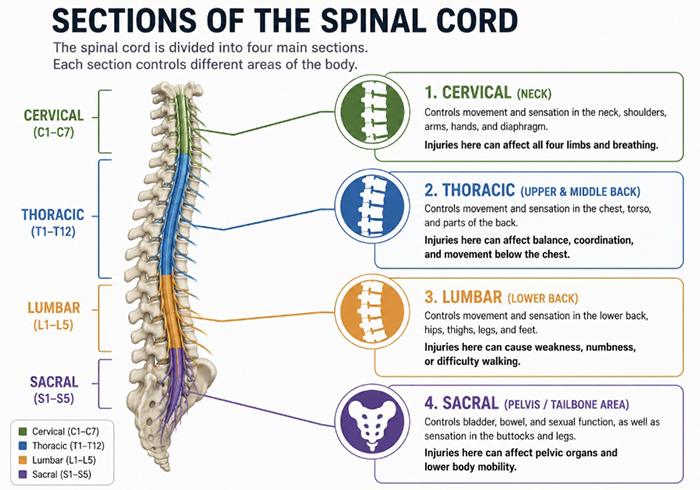
The symptoms and long-term impact of a spinal injury often depend on both the location of the damage and whether the spinal cord was fully or partially injured.
What is considered a severe spinal cord injury?
A severe spinal cord injury is generally one that causes major loss of function, permanent physical limitations, or long-term neurological damage. These injuries, which often involve the cervical or thoracic spine, can dramatically affect a person’s ability to work, care for themselves, or live independently.
In the workers’ compensation context, severe spinal injuries often involve:
- Partial or complete paralysis
- Loss of sensation in the limbs
- Significant nerve damage
- Multiple spinal surgeries or spinal fusion procedures
- Chronic pain that interferes with daily activities
- Lasting mobility problems requiring assistive devices
Some workers are placed on work restrictions or are unable to return to physically demanding jobs after a severe spinal injury, especially in industries like construction, manufacturing, transportation, roofing, or logging.
Others may need ongoing rehabilitation, pain management treatment, home modifications, or vocational retraining.
What are the red flag signs of a spinal injury?
Some spinal injuries cause immediate symptoms, while others become worse over the hours or days after a workplace accident. Certain warning signs may suggest serious spinal cord damage or nerve involvement and should never be ignored.
Common red flag symptoms include:
- Severe neck or back pain after a fall, lifting accident, work-related car crash, or blow to the spine
- Numbness or tingling in the arms, hands, legs, or feet
- Weakness in the limbs or difficulty gripping objects
- Trouble standing, walking, or maintaining balance
- Loss of coordination or reduced range of motion
- Shooting pain that travels down the arms or legs
- Loss of bladder or bowel control
- Difficulty breathing after a neck or upper spine injury
Some workers assume they only pulled a muscle and continue working despite serious symptoms. In other cases, swelling around the spinal cord may worsen over time and create delayed neurological problems.
Prompt medical care is important because early treatment can sometimes help reduce long-term damage.

What To Do & Not Do When Filing an Alabama Workers’ Comp Claim
Learn how to avoid costly mistakes that can prevent you from maximizing your workers’ compensation claim.
How do I file a workers’ comp claim in Alabama if I injure my spine?
If you hurt your spine at work, taking the proper steps early can help protect both your health and your workers’ compensation claim. Here’s what you need to do:
- Get medical attention immediately. Even if your symptoms seem minor at first, spinal injuries can worsen over time. Pain, numbness, weakness, or nerve symptoms may not fully appear until hours or days later. Prompt treatment also creates medical records that help connect the injury to your workplace accident.
- Report the injury to your employer in writing. Let your supervisor, manager, or employer know about the injury as soon as possible, even if they witnessed the accident themselves. In Alabama, injured workers are generally expected to report workplace injuries within 5 days. Waiting too long can create disputes about when or where the injury happened. In most situations, failing to report the injury within 90 days can prevent you from recovering workers’ compensation benefits altogether.
- Make sure the proper paperwork is submitted. After you report the injury, your employer should submit a First Report of Injury to its workers’ compensation insurance carrier, so be sure to verify that they’ve submitted it. This form includes details about the accident, the injury, and your wages.
- Follow through with treatment and restrictions. Spinal injury claims often involve MRIs, specialist evaluations, physical therapy, injections, or surgery consultations. Missing appointments or ignoring work restrictions can give the insurance company an excuse to question the seriousness of the injury.
If your claim is denied or undervalued, a local Alabama work injury attorney can help protect your rights and fight for the benefits you’re owed.
How much compensation can I get for a spinal cord injury at work in Alabama?
The compensation you can get for a spinal cord injury depends on the severity of the injury and your long-term limitations. Because these injuries can affect a person for decades, any settlement offer from workers’ comp should include both current losses and future medical and financial needs.
Workers’ compensation benefits for spinal injuries may include:
- Medical benefits. These benefits cover authorized medical care related to the injury, including emergency treatment, MRIs, surgeries, hospitalizations, physical therapy, pain management, mobility equipment, and follow-up care. When evaluating settlement value, it’s important to consider future surgeries, ongoing injections, medication costs, specialist visits, rehabilitation, and whether lifelong care may be necessary.
- Temporary disability benefits. If you cannot return to work while recovering, or you return to work on light duty and earn less than you were making before the injury, you may qualify for temporary wage replacement benefits. These typically cover about two-thirds of your average weekly wage.
- Permanent partial disability (PPD) benefits. If you recover enough to return to employment but are left with lasting nerve damage, reduced mobility, lifting restrictions, chronic pain, or decreased physical function, settlement discussions often focus on permanent impairment ratings, reduced physical capacity, and future employment limitations.
- Permanent total disability (PTD) benefits. Severe spinal cord injuries involving paralysis, major neurological damage, or inability to return to gainful employment may qualify for permanent total disability benefits. These claims are often among the highest-value workers’ compensation cases because they may involve decades of lost earning ability and extensive future medical care.
- Death benefits. If you die due to complications from a spinal cord injury at work, your family may be entitled to workers’ comp death benefits for funeral costs and income replacement.
The long-term financial impact of a spinal cord injury can be enormous. According to data originally published by the Christopher & Dana Reeve Foundation and adjusted for inflation levels in 2026, the estimated lifetime costs for spinal cord injuries based on age and level of injury are as follows:
Severity of injury
High tetraplegia (C1-C4)
Low tetraplegia (C5-C8)
Paraplegia
Incomplete motor function
Estimated lifetime costs at age 25
About $7.1 million
About $5.2 million
About $3.5 million
About $2.4 million
Estimated lifetime costs at age 50
About $3.9 million
About $3.2 million
About $2.3 million
About $1.7 million
Because these injuries can create lifelong medical and financial consequences, severe spinal cord injury claims are often heavily disputed by insurance companies.
Medical records, imaging studies, specialist opinions, and functional evaluations may all play an important role in determining the value of the claim and the benefits available under Alabama workers’ compensation law.
Need help with a spinal cord work injury claim in Alabama?
Spinal cord injury claims are often some of the most complicated and heavily contested workers’ compensation cases in Alabama. Insurance companies may dispute the severity of the injury, question whether future treatment is necessary, or argue that you can return to work sooner than your doctors recommend.
Having a law firm that understands how these claims are handled locally can make a major difference in the outcome of your case.
At Nomberg Law Firm, we’ve been representing injured Alabama workers for more than 5 decades, so we understand the challenges people face after serious workplace accidents. Whether your spine was injured in a forklift accident, a heavy equipment incident, a scaffolding accident, or a vehicle crash at work, our Birmingham work injury lawyers can guide you through the claims process and advocate for your long-term financial and medical needs.
If you or a loved one suffered a spinal cord injury at work in Alabama, contact Nomberg Law Firm today for a free consultation to discuss your options and learn how we can help get you the full benefits you deserve.
References
Costs Of Living With A Spinal Cord Injury | Reeve Foundation. (n.d.). Christopher & Dana Reeve Foundation. https://www.christopherreeve.org/todays-care/living-with-paralysis/costs-and-insurance/costs-of-living-with-spinal-cord-injury/