
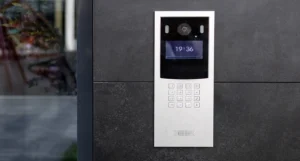
Video doorbells and home security cameras have become standard features in many neighborhoods. But as these devices become more advanced, so do the questions surrounding them. It’s no longer just about what your camera captures. It’s about who else might be able to see it, store it, or use it.
Two recent events have pushed those concerns back into the spotlight.
During the Super Bowl, Amazon Ring aired a commercial introducing an AI-driven “Search Party” tool designed to connect participating cameras in a neighborhood to help locate a missing dog. While framed as a community safety feature, critics immediately questioned how such a network could be used, who controls access to the footage, and whether it opens the door to broader surveillance.
Around the same time, investigators released footage from a Google Nest camera related to the abduction of Nancy Guthrie. The video showed a masked individual at her front door. The case sparked renewed scrutiny over how long video is retained, how authorities obtain it, and why retrieving digital footage can sometimes take longer than expected.
In this article, we’ll help you understand how these systems handle privacy, who may gain access under certain circumstances, and how video footage can be used in legal disputes in Alabama.
If you’ve been injured in Birmingham and have questions about how doorbell camera footage can be used in your personal injury or workers’ comp claim, reach out to Nomberg Law Firm for a free consultation.
What are you actually agreeing to when you set up a smart doorbell?
Installing a video doorbell isn’t just about mounting a device. It also involves agreeing to a company’s data practices—often with a quick tap on a screen.
Some systems save recordings inside your home, either directly on the device or on a connected storage hub. That setup generally keeps your footage under your physical control, but it may come with storage limits and fewer advanced tools.
Other systems automatically upload recordings to remote servers. Cloud storage makes it possible to access footage from anywhere and can preserve video even if the camera is stolen or damaged. It also supports features like motion alerts and searchable video history.
However, it means your recordings are stored on company servers.
So, how long do doorbell cameras keep footage?
How long they remain available depends on the provider’s policies and the type of subscription you choose. In some cases, videos are deleted after a set period unless you pay for extended storage.
When you click “agree” during setup, you are typically consenting to terms that address:
- How long your recordings will be kept
- Where your video files will be stored
- Whether the device captures audio in addition to video
- Under what conditions your data may be shared with third parties
Many users move through these screens quickly without reviewing the details.
Legally, those digital agreements are usually treated as binding contracts. Courts generally look at whether you were given notice of the terms and an opportunity to review them—not whether you actually read every provision.
Once you accept the conditions, you are generally bound by the company’s stated policies on storage, access, and data handling.
Is the Ring doorbell private?
It depends. Most recordings are never viewed by anyone other than the account holder. Companies like Amazon, Ring, and Google Nest do not routinely monitor customer video.
Can the police access my doorbell footage?
Yes, footage can be disclosed if the company receives a valid search warrant, subpoena, or court order. In emergency situations involving potential serious harm, companies may also provide access to law enforcement.
Transparency reports show that thousands of these legal requests are made each year. In one recent 6-month period, Ring reported receiving more than 5,000 legal and preservation requests, and only some affected users were notified.
Are Ring doorbells safe from hackers?
There is some risk of unauthorized access. Weak passwords, reused credentials, and phishing scams have allowed hackers to access accounts in the past. While companies invest in security, no connected device is immune. Strong passwords and two-factor authentication significantly reduce that risk.
What are the concerns about Ring’s new “Search Party” feature?
Ring’s new AI-powered “Search Party” tool is designed to scan participating neighborhood cameras to help locate a lost pet. If a device records a possible match, the owner can choose whether to share the footage.
While the feature is marketed as voluntary and community-focused—and Ring says employees are not monitoring live feeds—critics are uneasy about the broader implications.
Linking multiple cameras through AI scanning creates a network that some believe could expand into wider surveillance over time.
Concerns have also grown following Ring’s partnership with Flock Safety, a company that provides license plate recognition technology to law enforcement. Even though Ring states that sharing is optional and limited, some homeowners question how such systems might evolve in the future.

Questions To Ask Before Hiring a Personal Injury Lawyer
Learn what to ask when searching for the right lawyer for your case.
How can doorbell camera footage be used in personal injury and workers’ compensation cases?
Video from smart doorbells is showing up more often in injury claims in Alabama and across the U.S., especially when incidents happen on or near private property.
How doorbell camera footage can be used in personal injury cases
In personal injury cases, a nearby camera might record a car accident, a pedestrian getting hit by a vehicle, or a visitor falling after tripping over a broken step. Footage can help establish timing, visibility, road or property conditions, and whether a hazard had been left unaddressed. When accounts differ, video can provide an objective record of what occurred.
How doorbell camera footage can be used in workers’ comp
In workers’ compensation cases, footage is particularly relevant for employees who perform services at homes or residential complexes. Landscapers, cable installers, appliance repair technicians, and delivery drivers for companies like Amazon, UPS, and FedEx often work in areas covered by doorbell cameras.
A recording may show unsafe stairs, icy pavement, unsecured animals, or poorly lit entrances—evidence that can support a workers’ comp claim by documenting the work environment.
At the same time, employers or insurers may use video to question an injury or deny a claim. For example, if a doorbell camera captures a worker with a shoulder injury reaching up briefly to close the back of a van, the insurance company could argue that this movement shows the shoulder is functioning normally.
In these cases, video can be powerful—but context matters. How the footage is interpreted and presented can significantly influence the outcome of a personal injury or workers’ compensation claim.

How Workers’ Comp Differs From Personal Injury
Learn key differences between Alabama workers’ compensation claims and personal injury lawsuits.
Is doorbell camera footage admissible in court in Alabama?
In many cases, yes—but certain conditions must be met. Alabama courts generally allow video recordings in both civil and criminal cases if the footage is relevant, properly verified as authentic, and obtained legally.
Before it can be shown to a judge or jury, someone must confirm that the recording is genuine and accurately represents what it claims to depict. This often involves testimony from the homeowner or another person familiar with how the camera system works.
Audio recordings raise additional issues. Alabama follows a one-party consent rule, meaning that recording a conversation is typically lawful if at least one participant agrees to the recording.
However, whether a conversation qualifies as “private” depends on the setting.
Courts consider whether the individuals involved had a reasonable expectation of privacy. A discussion inside a home may be treated differently than a conversation on a public sidewalk.
Even when footage is lawfully recorded, it is not automatically admitted. The opposing side may challenge it based on standard evidentiary rules, such as whether it is relevant, properly preserved, or supported by adequate authentication. If a recording was obtained in violation of the law, a court may exclude it entirely.
How can I protect my data if I have a Ring camera?
If you use a Ring camera, there are practical steps you can take to better safeguard your footage and account information, including:
- Start by strengthening account security. Use a unique, complex password that you do not reuse on other websites. Enable two-factor authentication so that logging in requires a secondary verification step, such as a code sent to your phone. This significantly reduces the risk of unauthorized access.
- Keep your devices updated. Install firmware and app updates promptly, as they often include security patches.
- Understand your storage settings. Know whether your footage is stored in the cloud, how long it is retained, and whether automatic deletion is enabled. If long-term storage is important to you, confirm that your subscription plan supports it.
- Review your privacy and sharing settings. Check who has access to your account, whether video sharing features are enabled, and what permissions you’ve granted within the app. Disable features you do not use.
- Secure your home network. Use a strong Wi-Fi password, enable encryption on your router, and consider setting up a separate network for smart devices.
- Read the privacy policy. Finally, periodically review the company’s privacy policy and transparency reports so you understand how data may be shared and under what circumstances.
Taking these steps cannot eliminate all risk, but they can meaningfully reduce the chances of unauthorized access or unintended data exposure.
Have questions about how doorbell camera footage might impact your personal injury or workers’ comp claim in Alabama?
Video evidence can strengthen a case or complicate it, depending on how it’s handled. If a Ring or other doorbell camera captured footage connected to your injury, it’s crucial to understand how that evidence may be used and whether it supports your claim.
At Nomberg Law Firm, our local Birmingham injury attorneys have extensive experience handling both personal injury and workers’ comp cases in Alabama. We understand how insurers approach video evidence and how to properly present or challenge footage in court.
If you have concerns about how doorbell camera footage could affect your case, contact Nomberg Law Firm today for a free consultation, and get clear guidance on your next steps.